Showing posts with label curriculum. Show all posts

Monday, March 1, 2021

RBI for Older Children

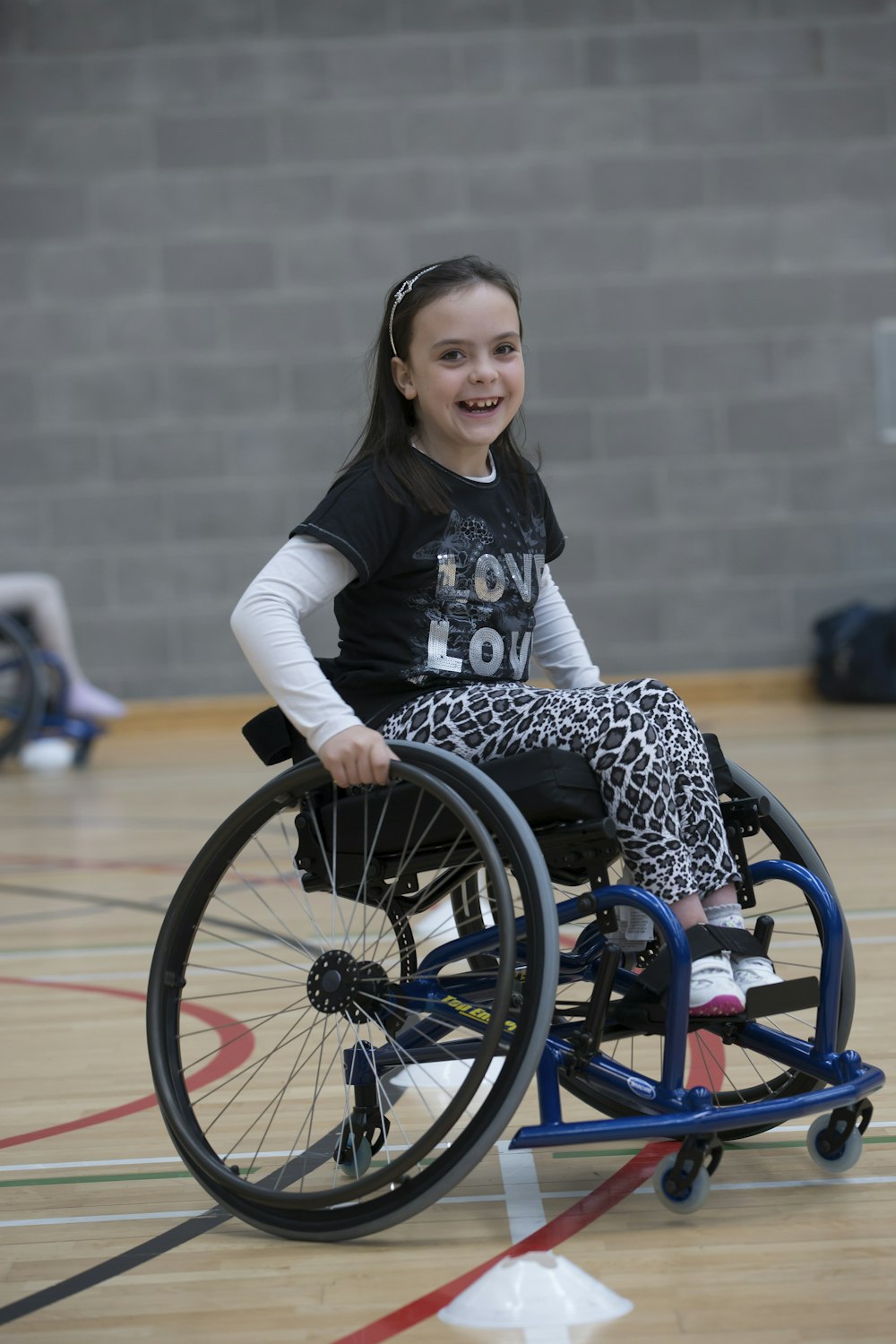
girl in black and white long sleeve shirt sitting on black wheelchair
Unsplash.com


I've been asked quite a bit about the RBI with older kids and adults. It seems important to get information about the child's functioning and participation in school routines, which could be done through a teacher interview or having the teacher complete a questionnaire. If families are concerned about their children's performance in academics (i.e., curriculum), we should point out that a child can only succeed in the classroom to the extent that he or she is engaged, independent, and having social relationships: Right back to the Routines-Based Model! As some brilliant researchers wrote in 1985, a child cannot learn unless a child is engaged. 

 Some parents are less concerned about a child's functioning at home than the child's functioning at school. Fine. We should still interview parents about functioning at home, because the school isn't going to help them with any home routine concerns or family concerns. But we should reassure them we'll find out about needs at school. 

My ideas for that, after consultation with Cami Stevenson, are 

• Interview the teacher about (a) academic routines, (b) free-time routines, (c) outside routines, and (d) mealtime routines. 

• Modify the STARE by labeling the routines with lessons as well as nonlesson routines and have the teacher do occasional STAREs on the child. 

• Create a new Routine x EISR questionnaire for the teacher to complete on the child. 

• Modify the VECTOR with lessons and nonlessons. 

BTW, our Spanish implementers, Catalina Morales Murillo and colleagues, have crosswalked the Classroom Measure of Engagement, Independence, and Social Relationships (ClaMEISR) with the International Classification of Functioning for Children and Youth (ICF-CY). 

 I understand the increasing interest in academics with older children but keep returning to the fact that, with kids with disabilities, we need to ensure they are engaged, independent, and having social relationships, if they are to succeed academically.

Sunday, October 2, 2016

MENTAL SHIFT 7: What matters is how children function in their everyday lives.

Function = participation = engagement = learning

Yes, children should learn about the world, learn to move, learn to speak, learn to manipulate objects, learn to solve problems, learn to get along with others, and learn to take care of themselves. The curriculum of early childhood is clear. It shows up in state early-childhood standards, in tests, in curricula, and in parents' expectations. The question is What's the best way for children to learn this material? Or perhaps the philosophical question is whether this curriculum is what we aim for, or is it the natural outgrowth of normal development? Maybe we just made it the curriculum, because it's what we saw happening in early childhood. The outcome.

This question has bigger implications than you might think. If it's what children "should" learn, then adults will move heaven and earth to teach children these skills. It also becomes the framework for assessment and individualized program planning, usually based on the child's deficits. If a child is behind in one or more of these areas, those become targets for intervention. This can lead to making the child do what he or she is no good at.

If the areas of learning I outlined above are the outcome rather than curriculum, then we know children learn the content at different paces and in different ways and sometimes not at all. We call that developmental disability. Interesting.

Now let's turn our attention to how children learn best. If we take a curricular approach to functioning, as I mentioned above, we might be tempted to take an academic approach; I use that term to refer to the "academy"--the school, with lessons and a fair amount of adult direction. If we take an outcome approach, we let learning happen, supposedly naturally, which sounds almost as frightening. The classic constructivist philosophy endorses this approach. If the child is a curious, active, intelligent being with a good environment, naturally occurring learning will be fine. But if the child has inherent difficulties in learning or a poor environment, we need to pay attention.

So what do we change? We can't cure the biophysical condition, including what's going on in the brain--at least not efficiently. Brain science does claim we can restructure brains, but--and here's the kicker: We do it by changing the environment. The environment is comprised of social, nonsocial, and temporal conditions around the child. Included in the social environment are the interactions the child has with adults or even other children--interactions that can enhance or impede learning. The nonsocial environment includes safe or unsafe spaces, things to play with (they don't have to be toys), places to move around in or on, and so on. The temporal environment has to do with the sequence of routines, which in some families is predictable and in others is not.

The quality of the child's environment for enhancing learning is what Bruder and Dunst have discussed in their work on learning opportunities.

Mental Shift 7 is about understanding that learning does happen in everyday routines. If a child is functioning in a routine, it means he or she is participating meaningfully, whether cuddling with the mother at wake-up time, eating independently at breakfast time, helping to get dressed at dressing time, putting on shoes at going-out time, pointing at trucks in the car ride, playing independently during dinner preparation, using words or signs at dinner time, playing with a parent during hanging-out time, putting a washcloth to the face at bath time, or turning pages in a book at bedtime. And I listed only one of a score of skills a child could display in each routine--and there are more routines than these. A child's day is full of learning opportunities--of opportunities to participate meaningfully. When a child is so participating, we say the child is engaged. And if the child is engaged, the child can learn. As Dunst, Trivette, and I wrote (on papyrus, I think) back in 1985, a child cannot learn if a child is not engaged.

We do want children to learn and we do want them to function in their environments. Fortunately, these two things go together, joined by participation and engagement.
Thursday, July 1, 2010

Curriculum for Home Visiting

Q: I would like to know what you would suggest as a good curriculum for us to use as providers. Many curriculums are on the market, but we need something that can be useful for sharing when doing activities and providing carry over suggestions to parents.

A: A curriculum is supposed to be what is taught to the learner. In early intervention, (a) home visiting is not just about "teaching" parents and (b) when they do want to be taught something, the content should come from (i) their individualized needs, not a curriculum; and (ii) the IFSP, if those needs are already reflected on there. In some cases, needs not on the IFSP should be put on there, if the family desires.

Many people confuse a curriculum with intervention suggestions. So your question might actually be about the intervention suggestions we make to parents. In our model, these come not from a book (e.g., curriculum) but from a process called Home-Based Behavioral Consultation. This is a collaborative, problem-solving process that marries the family's needs and resources (e.g., which routines they want help with and what they think is feasible) with the home visitor's expertise (i.e., strategies that address the specific need identified). This requires the home visitor to have knowledge about child development, family functioning, and behavioral interventions. It would be a great resource to take typical problems in everyday home routines and list various commonly suggested strategies, but I know of no such resource. So we are still left with relying on the training, experience, and collaboration of home visitors with families. Home visiting isn't an entry level position; it is sophisticated.

Having said all this, we do use the Measure of Engagement, Independence, and Social Relationships to monitor children's functioning in routines. This should not be used as a curriculum: It does not dictate what we do with families, but it helps those home visitors who don't think about the various components of child functioning within routines.

Perhaps the closest thing to a "curriculum" we use is the Routines-Based Interview, which is actually a process, not a product. But it is the tool for helping families decide what they want on the IFSP, which, as I mentioned earlier, is the list of things to work on--the definition of a curriculum.