Showing posts with label teachers. Show all posts

Monday, March 1, 2021

RBI for Older Children

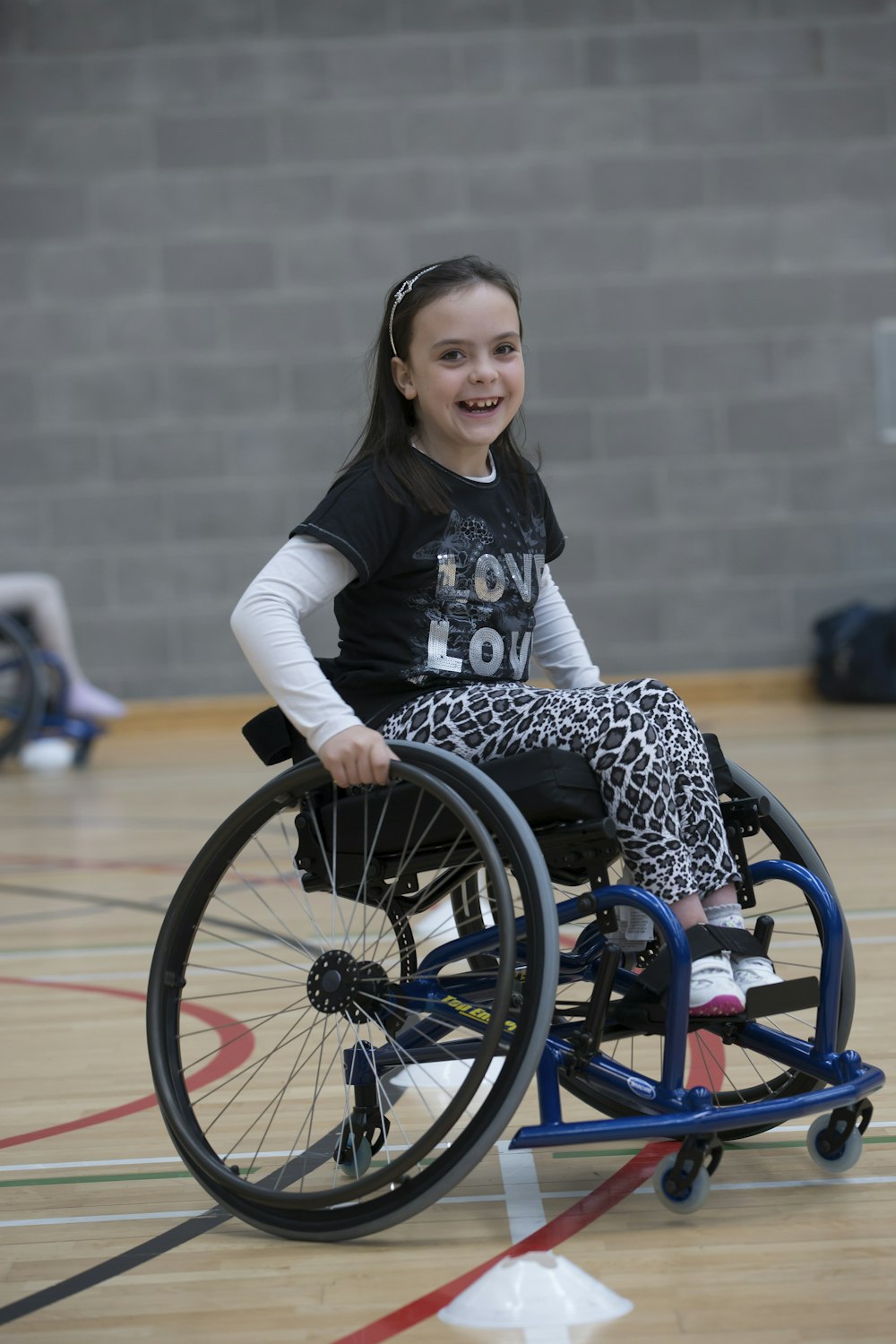
girl in black and white long sleeve shirt sitting on black wheelchair
Unsplash.com


I've been asked quite a bit about the RBI with older kids and adults. It seems important to get information about the child's functioning and participation in school routines, which could be done through a teacher interview or having the teacher complete a questionnaire. If families are concerned about their children's performance in academics (i.e., curriculum), we should point out that a child can only succeed in the classroom to the extent that he or she is engaged, independent, and having social relationships: Right back to the Routines-Based Model! As some brilliant researchers wrote in 1985, a child cannot learn unless a child is engaged. 

 Some parents are less concerned about a child's functioning at home than the child's functioning at school. Fine. We should still interview parents about functioning at home, because the school isn't going to help them with any home routine concerns or family concerns. But we should reassure them we'll find out about needs at school. 

My ideas for that, after consultation with Cami Stevenson, are 

• Interview the teacher about (a) academic routines, (b) free-time routines, (c) outside routines, and (d) mealtime routines. 

• Modify the STARE by labeling the routines with lessons as well as nonlesson routines and have the teacher do occasional STAREs on the child. 

• Create a new Routine x EISR questionnaire for the teacher to complete on the child. 

• Modify the VECTOR with lessons and nonlessons. 

BTW, our Spanish implementers, Catalina Morales Murillo and colleagues, have crosswalked the Classroom Measure of Engagement, Independence, and Social Relationships (ClaMEISR) with the International Classification of Functioning for Children and Youth (ICF-CY). 

 I understand the increasing interest in academics with older children but keep returning to the fact that, with kids with disabilities, we need to ensure they are engaged, independent, and having social relationships, if they are to succeed academically.

Monday, June 20, 2016

MENTAL SHIFT 4: ANYONE SPENDING TIME WITH THE CHILD HAS THE OPPORTUNITYTO TEACH THE CHILD

Children learn from those around them, but there must be a threshold amount of time. Or perhaps the time spent is correlated with the impact one can have on the child. The mental shift in this post is from thinking that intervention comes from people who spend short amounts of time and not from those who spend long amounts of time.

The work of Mary Beth Bruder, Carl Dunst, and Carol Trivette on "learning opportunities" has documented that ordinary routines in a child's life are where learning naturally happens. And the work of Tom Weisner and Cindy Bernheimer has shown that everyday routines are the chunks of time that families construct to make their lives work, and that these ecocultural niches are the context of child and family development.    

The discussion here is about substantial time. I've used 15 hours a week as an informal, unscientific criterion for deciding whether a caregiver should be included in a Routines-Based Interview (RBI). If the relationship between time spent and influence on child functioning is linear, those spending fewer than 15 hours a week can't be said to have no influence. The issue becomes one of efficiency. If the amount of influence is small, then it's not worth their time or ours to be interviewed. Families, however, can always have anyone they like at the RBI.

Who spends substantial time with the child? Almost always the custodial adults, such as parents. Custodial adults, therefore, are the parent figures in the child's life, so, from now on, I'll just call them "parents." Adults who are responsible for care of the child, perhaps while the parent is working, also spend substantial time with the child; these are child care providers or preschool teachers, for example. 

What about influential people who don't spend the requisite amount of time, such as grandparents. They can give children enjoyable times, new opportunities, special moments, and so on--all of which can create memories, if the child is old enough. But early intervention should focus on those adults who are around during the everyday routines: They have enough teaching opportunities distributed through the day that can make a difference. Furthermore, they're teaching when, where, and with whom the child needs the skills. By teaching in the moment, the child is learning to respond to the naturally occurring "discriminative stimuli." When someone walks in the room, the child learns to say hi. That's a lot better than repeating hi in multiple trials in an early intervention session with a professional. Children can learn context-specific behaviors that reinforce the adults in charge of those contexts, and here I'm talking about the short-time caregivers, such as visiting grandparents or early intervention professionals. The child can learn not to touch the ornaments at Grandma's house or to take his seat in the therapy room. The issue now is one of functionality. How do these help with the child's functioning in everyday routines? If they generalize, fine, but young children, especially if they have developmental disabilities, do not transfer well. If the adult also "transfers," then you get a bit more bang for your buck. For example, if an early intervention visit focuses on the parent interacting with the child, perhaps practicing how to teach the child something during a routine, the parent can then use the same task directions and prompts during regular life. Therefore, because the adult generalized his or her strategies from the short-time session to the long-time real life, the child has a chance of learning the skill.

In the Routines-Based Model, early intervention supports (i.e., services) are aimed at the long-time adults, usually parents and teachers. In future MENTAL SHIFT posts I'll discuss how we provide those supports.

Friday, May 20, 2016

MENTAL SHIFT 3: CHILDREN ARE LEARNING FROM THEIR CAREGIVERS, WHETHER YOU WANT THEM TO OR NOT

Continuing the mental shifts necessary to provide functional, family-capacity-building early intervention, here I discuss the fact that caregivers are teaching their children already. So what is the role of early intervention (birth-6)?

We are building on the foundation caregivers (parents and teachers) have already established with the child. As Vygotsky pointed out early in the 20th century, children learn from other people who do things at a little more advanced level than they do (i.e., in the zone of proximal development). Obviously, adults are way more advanced, but, when they're teaching children, they elicit behaviors that are minor advancements to the child's existing behaviors. If they're too advanced, the child doesn't learn them well. If they're not advanced enough, no learning occurs although the child might get in some practice. Similarly, when we work with adults, our best efforts should involve ideas for tweaking what the adults are already doing. This is for a different reason from why we work only in the child's ZPD. With adults, it's more about homeostasis: Adults tend to develop their ecocultural niches that are not terribly malleable.

As the research of Bruder and Dunst has shown, learning opportunities abound in families' lives. Some families make the most of these opportunities and others are possibly unaware of their impact on their children's learning and development. In research conducted through the NICHD, one of the best predictors of children's outcomes at age 16 years was the quality of mothering they children received when they were infants. This was also true for those infants in full-time child care. Parenting makes a difference.

As early interventionists, therefore, we don't go into homes with the assumption that we're going to train parents to teach their children. Rather, we know they are already teaching their children, and we're helping them figure out (a) why the child is or isn't doing something in the course of everyday routines, (b) what strategies can be added to the routines (i.e.,  things parents can do in their existing routines) to help the child participate more meaningfully or competently, and (c) whether or not those strategies worked. These are essentially the three stages of Sue Sheridan's conjoint behavioral consultation. Early intervention is indeed a consultative process--the good, collaborative consultation, not the bad, expert consultation.

When we realize that families have already created the "teaching space" in their routines, our job is easier, more relevant, and more acceptable to families. Furthermore, we're expanding the family's capacity to teach their children by reinforcing it and building upon it. When an early interventionist creates new routines (e.g., heaven forbid, play time on the floor with select toys), it doesn't acknowledge the family's existing ecocultural niche. It sends the opposite messages: either you're not teaching your child or what you're doing isn't good enough.

Families' belief systems about their parenting role vis à vis teaching the child or their sense of self-efficacy in that role can be a factor in what we do in early intervention, as the following table shows:

 
Parents who don’t intentionally teach their child very much
Parents who intentionally teach their child a lot
Early intervention works directly with the child
Parents are reinforced in this belief; we need professionals to teach the child
Parents might believe what they do is not enough
Early intervention builds the family’s capacity
Parents become more aware of the teaching they do and increase the amount
Parents’ self-efficacy and confidence are increased, thus sustaining and even expanding their teaching